

Pehli Influencer
How to walk your daughter through her first period calmly, lovingly, and with the right guidance.
The first sentence a mother speaks on her daughter's first period can shape how she feels about her body for the rest of her life. Let's make that sentence a soft one.
An initiative by
-

- ×
-

i-activ represents Period Panty & Sanitary Napkins.
For more details contact:
📞 1800229898 |
✉️ consumercare@piramal.com
Before the first period
The conversation should not begin on the day it happens. It should begin months before — softly, casually, like talking about teeth, or hair, or rain.


Dr. Anjali Kumar
Senior Gynaecologist & Obstetrician
Advanced Laparoscopic & Robotic Surgeon
Watch for the signals of impending menarche: breast budding (often appearing 2 years before the first period), a sudden growth spurt, mild acne, a clear/white vaginal discharge that begins 6–12 months before. When you notice any of these, gently move the conversation closer.
Periods should be a word she has heard at home long before she has felt it in her body.
”
simply, gently, once.
She doesn't need a diagram of fallopian tubes today.
She needs one true
sentence she can keep in her pocket.
Inside your tummy, there's a soft little place called the uterus. Every month, your body softly prepares the inside of the uterus — just in case, one day, much much later, you choose to grow a baby. When that soft lining isn't needed yet, your body very gently lets it leave, and that's the blood you see. It isn't a wound. It isn't a problem. It's your body's monthly rhythm — natural, gentle, yours.
That single paragraph is enough for the first day. The rest can come slowly, over the months, when she asks.
Your body in four soft phases
Inside your body has a soft little nest, and the changes in the nest puts your body in 4 phases.The Period Phase
The old lining of the nest is gently leaving the body. You may feel tired, emotional, or uncomfortable sometimes — and that's okay. If anything worries you, you can always talk to a parent or trusted grown-up.
Building the Nest
Body starts building a soft new lining again. This is the phase where you might feel more happy, strong & energetic.
Nest is ready
Now the nest is ready — just in case a tiny new guest ever needs a place to grow someday. In the end this is one of the most beautiful ways the body prepares with care.
Restarting phase
If the new guest does not arrive, the body lets go of the lining of the nest, and prepares to begin a fresh new cycle again.
A gentle conversation guide
Sanitary Products and How to Wear Them
For a child, the body is one mystery. The product is another. Take both mysteries away on the same afternoon, with a cup of milk and an unhurried hour. Giving her a demo would be the best way of explaining.
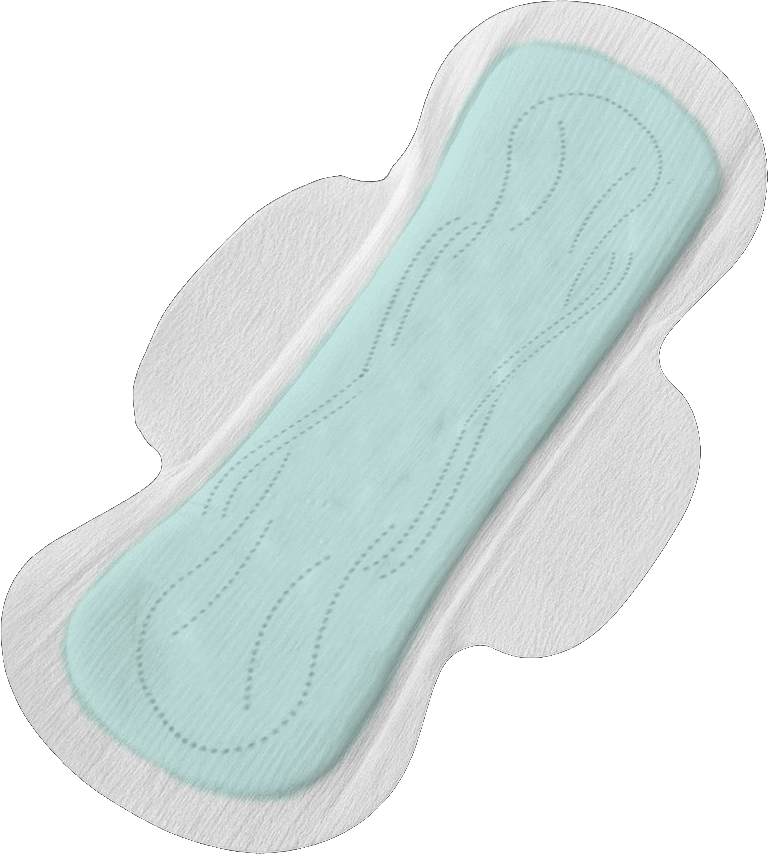
The everyday pad
A soft cotton-like layer that sticks to the inside of her underwear. The flaps (called wings) wrap around the underwear from below, so it doesn't move.
- Open the wrapper. Pull off the long paper strip in the middle.
- Stick the pad to the inside of clean underwear, sticky side down.
- Pull off the small paper strips on the wings.
- Fold the wings under, so they hug the underwear from below.
Change every 4–6 hours. More often on heavy days. Wrap the used pad in its wrapper or in toilet paper before placing it in the bin.
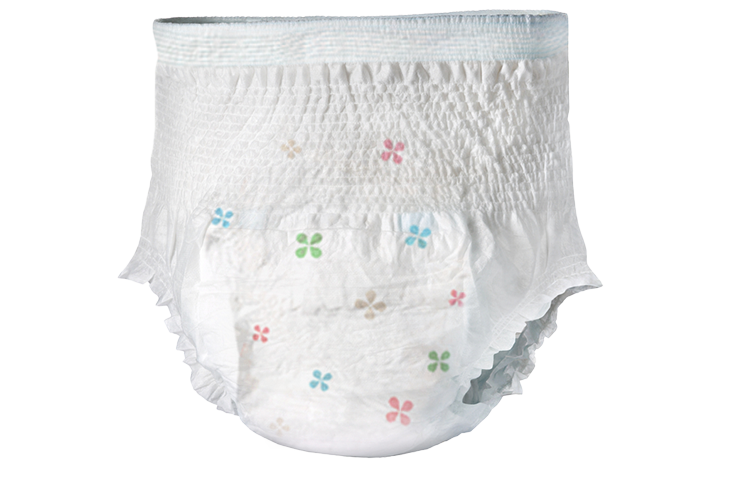
The period panty
A regular-looking underwear, except the inside layer is specially made to soak up period blood quietly and hold it in place — no pad needed. Perfect for school days, sleep, long bus rides.
- Open the pack and take out a fresh period panty. Tear along the side seams to open it out flat, just like a fresh pad.
- Wear it just like normal underwear — the soft absorbent layer is built in, on the inside.
- The thicker, slightly darker side always goes against the body — that's the absorbent layer.
- Wear for 6–8 hours on a normal day. Change sooner on heavier days.
- When it's time to change, roll it inward tightly, wrap it in the disposal pouch or tissue, and throw it in a covered bin. Never flush it.
- Wash your hands before and after — always.
For an 8–12 year old, the fear of leaking in public can be larger than the period itself. A period panty quietly removes that fear with its 360° protection and snug fit. She doesn't have to remember to change a pad between classes. She doesn't have to ask the teacher. She doesn't have to feel watched. For a small child still learning her body, that quiet confidence is everything.
-
Wash hands before and after. Always. Same as before eating.
-
Change regularly. Every 4–6 hours for pads, 6–8 for period panties — even if she “doesn't feel like” it.
-
Wipe front to back. A small thing that prevents infections for life. Teach it once, gently.
What helps her feel safe and what doesn't.
Two simple lists. The first is what she needs most from you, in this order. The second is what to quietly set aside — phrases and habits most of us were raised on. None of them are our mothers' fault. But the line can stop with us.

What she needs most
Safety
That you are not panicking.
That nothing has gone wrong.
Normalcy
That every woman she loves has been through this. Maa, Mausi, didi, teacher.
Agency
That she has a kit, a plan, and a choice in how she manages this.
Privacy
That it's hers to share, or not. Not gossip. Not announcement.
Continuity
That she is still your child. Still going to school. Still allowed to climb trees.
What to gently set aside
Words to leave behind
-
"Now you are a woman." She is still a child. Let her be one. Womanhood arrives slowly.
-
"Don't tell your father / brothers." Secrecy teaches her it is something to hide. It isn't.
-
"Be careful around boys now." This places the burden of behaviour on her.
-
"Don't enter the kitchen / temple." A private adult conversation — never a rule for day one.
-
"Don't touch the pickle." A myth. Quietly let it go.
-
"This is the curse of being a girl." Never. Not even as a joke. She is listening.
Habits to leave behind
-
Whispering the word "period." Say it at normal volume. So she does too.
-
Wrapping pads in black plastic. A small pouch is enough. Black plastic teaches shame.
-
Over-explaining. She is 9, not 19. One paragraph today is enough.
-
Making it a "special talk." Keep it casual. Big build-ups create suspicion.
-
Comparing. Never "your cousin handled it so well." She is your child.
-
Over-protecting. Periods are not pause buttons.